Mercury exposure in the work place and human health: dental amalgam use in dentistry
Dental clinics face mercury toxicity, waste, and weak safety practices—amalgam separators, capsulated mercury, and bans for kids and pregnancy are urgent.

Dental clinics face mercury toxicity, waste, and weak safety practices—amalgam separators, capsulated mercury, and bans for kids and pregnancy are urgent.
Chewing, brushing, and hot drinks spike mercury from amalgam—safe removal protocols plus carbon nasal filters and phytonaturals cut exposure.
People with amalgam had double the urine mercury; after removal, levels fell and self-reported symptoms were more likely to improve.
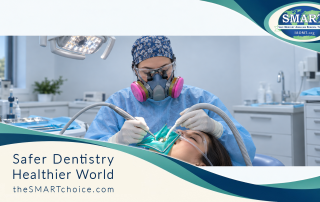
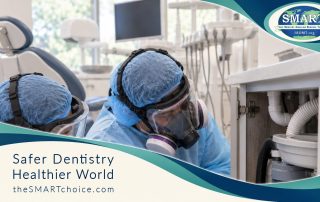
To maximize safety, dental schools should train students to remove amalgam only while using water spray and high volume suction. Alternatively, students should use appropriate occupational hygiene personal protective equipment during amalgam removals.
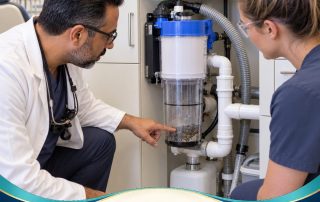
An ADA review of nine amalgam separators found all met the 95% ISO bar—but maximum fill volume and bypass design shape real-world mercury capture.
A practical guide to removing mercury fillings more safely—steps that protect patients and the dental team and align with the SMART approach.
Patients and dental students showed higher urine mercury after early contact with amalgam fillings—why careful handling and safer removal matter.
The mean blood concentration of mercury was 6.3 μg/l (SD=1.31 range 4.15–8.93). BML was positively associated with age, years in practice, working hours per day, number of amalgam restorations per day, number of amalgam removal per week, sea food consumption, working years in present office, using amalgam powder, using diamond bur for amalgam removal, dry sterilization of amalgam contaminated instruments, and deficient air ventilation.
Amalgam waste storage is done in a leak-proof, plastic container filled with water until disposed according to manufacturer instructions (Nixon and Rowbotham 1971, Mantyla and Wright 1976, Johnson 1978). Habitual amalgamator checks for cracks and mercury leakage is crucial (Langworth et al. 1997, Brown and Sherriff 2002).
This study evaluated the ability of a chairside filtration system to remove particulate-based mercury (Hg) from dental-unit wastewater. Prototypes of the chairside filtration system were designed and fabricated using reusable filter chambers with disposable filter elements. The system was installed in five dental operatories utilizing filter elements with nominal pore sizes of 50μm, 15μm, 1μm, 0.5μm, or with no system installed (control).