Chou HN, Anglen J, McManus KR. ADA Professional Product Review-Executive Summary: An Evaluation of Amalgam Separators. Journal of the American Dental Association. 2012 August; 143(8):920-921.
When amalgam is placed or removed, fine particles can enter the dental vacuum line andwithout capture—reach the public sewer. In 2010 the U.S. EPA signaled it would propose rules to cut mercury waste from dental offices, focusing on amalgam separators: devices that remove amalgam particles from wastewater before discharge. The ADA Professional Product Review’s 2012 executive summary reported laboratory testing of separators then sold in the United States, alongside practical purchasing guidance.
What the review found
ADA Laboratories evaluated nine U.S.-available separators (sedimentation, filtration, or both) under ISO 11143 / ANSI/ADA Specification No. 108, which requires at least 95% amalgam-particle removal efficiency in both empty” and full” conditions.
Reported findings include:
- All nine separators met the ISO 11143 95% efficiency requirement.
- Maximum fillable volume (MFV)the sludge capacity at which efficiency remains unaffected—is critical for maintenance. Only three units had clearly marked MFVs and transparent collectors. Three manufacturers stated MFVs did not match ADA lab measurements (two overstated capacity; one understated it).
- Seven separators used bypass mechanisms that keep suction strong when the capsule is full by sending unprocessed drainage to the sewerso clinics may not notice that capture has stopped. Two units lacked bypass; suction fades as they fill, which can cue staff to service the device.
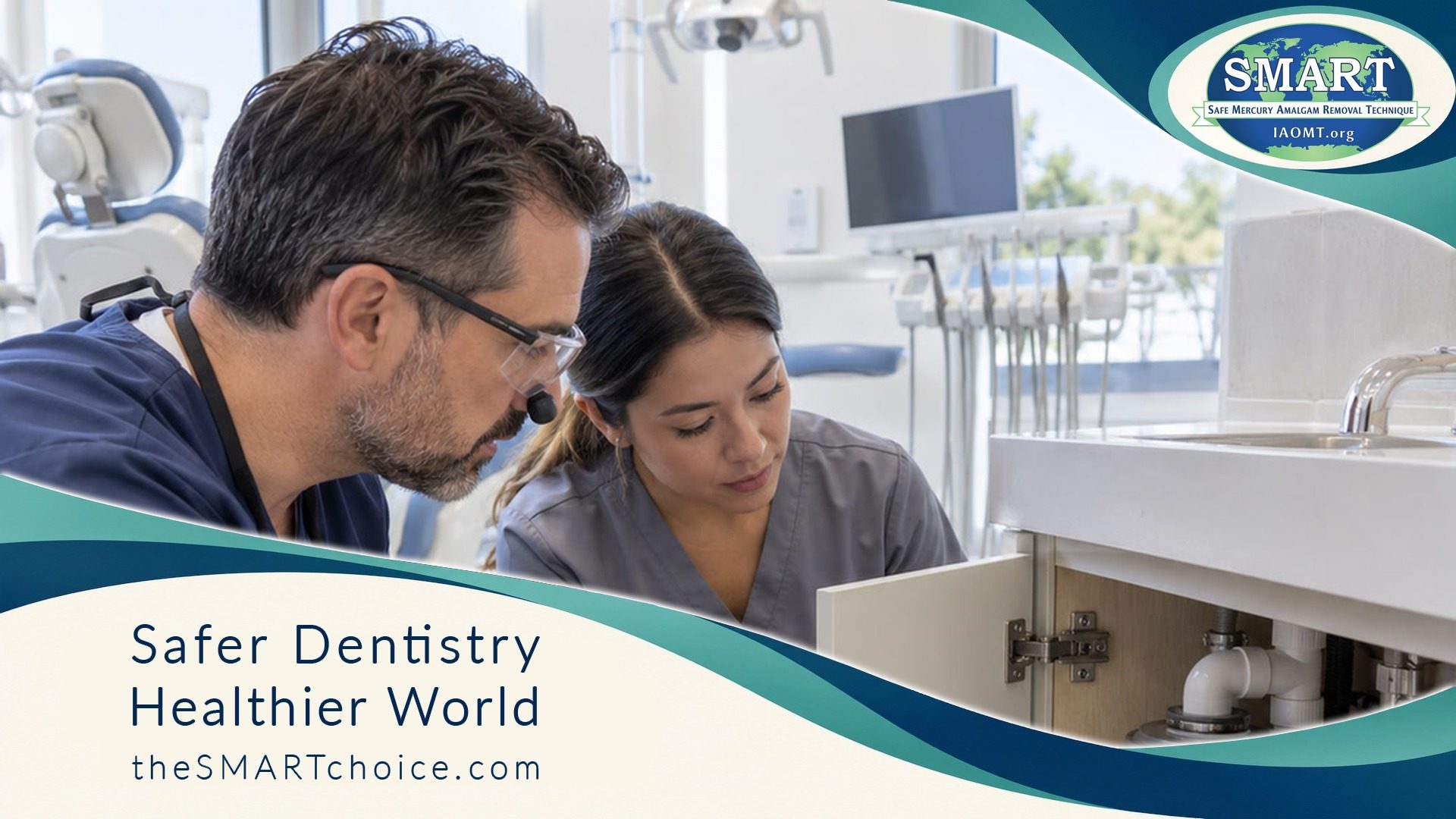
Companion practical guidance (McManus) emphasized installation location, space/utilities, building plumbing, suction effects, and lifecycle costfactors that decide whether a certified separator performs as tested in daily use.
Why it matters for SMART
SMART protects patients, dental teams, and the environment during amalgam removal. Chairside barriers and high-volume evacuation reduce operatory exposure; separators close the loop downstream by keeping mercury-bearing particles out of municipal wastewater. The ADA review’s takeaway is that passing a bench test is not enough: silent bypass or mislabeled MFV can undermine environmental protection even when chairside technique is careful. SMART-minded practices treat separator inspection and timely replacement as part of the same mercury-safety system as dams, suction, and PPE.
[Context: After 2012, EPA Dental Effluent Guidelines (40 CFR Part 441) generally required ISO 11143 / ANSI/ADA 108–compliant ≥95% separators for offices that place or remove amalgam, with existing-source compliance by July 14, 2020—aligning with the ISO threshold ADA labs used.]
Practical takeaways
- Verify certification Documented ISO 11143 or ANSI/ADA Spec. 108 at ≥95% efficiency.
- Know your MFV Prefer clear fill markings and transparent collectors; do not rely only on labeled capacity.
- Understand bypass — If the unit bypasses when full, inspect proactively so silent sewer discharge does not continue.
- Install and maintain correctly Plumbing layout and service access affect real-world performance.
- Pair with SMART chairside care — Separators manage wastewater; they do not replace patient and clinician protection during removal.
Bottom line: Contemporary separators can meet the 95% ISO barbut disciplined maintenance and awareness of MFV and bypass design keep mercury out of the sewer, complementing SMART clinical protections.