Colson DG. A safe protocol for amalgam removal. Journal of Environmental and Public Health. 2012;2012:517391.Patients and physicians often request removal of dental amalgam (“silver) fillings because of their high mercury content—about 50% mercury by weight, with silver, copper, tin, and zinc making up the rest (as Colson summarizes from the literature). Dr. Dana G. Colson’s 2012 open-access paper describes a protective clinical protocol meant to minimize absorption of mercury particulate and vapor while amalgams are replaced with composite or lab-processed materials, and stresses preparation before and after the visit to support mercury excretion under physician guidance.
What the study found
This is a methods/protocol review, not a randomized trial. Colson details a multi-step approach:
Preparation: Coordinate with the patients physician. Defer removal during pregnancy and breastfeeding (citing Health Canada and obstetric literature). [Secondary claim flagged: Colson reports older literature stating fetal blood mercury can be far higher than the mother’s—verify against primary/current guidance; not independently confirmed here.] Physician-directed supports (often including vitamin C) may be used around the appointment.
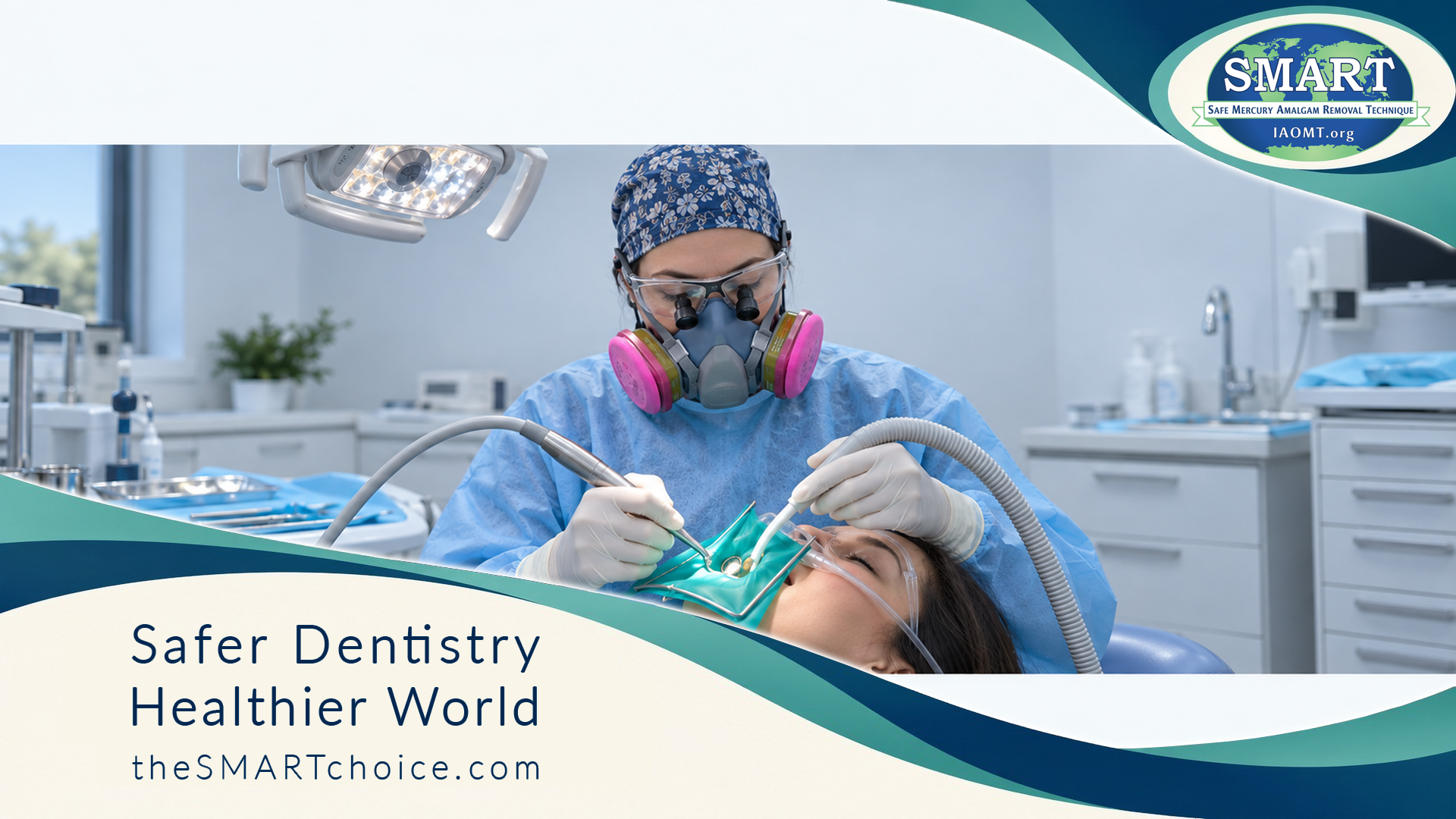
Chairside steps described: plastic apron under the bib; customized dental dam; activated charcoal or chlorella under the dam with cotton/gauze to intercept particles (sublingual tissues absorb quickly); face drapes, eye and hair protection; nasal oxygen and room air filtration; operator PPE (filtered mask, eye/hair protection, face shields); new bur, copious water, and high-volume suction; when possible, section and scoop amalgam in larger pieces to limit vapor (Colson cites IAOMT safe-removal guidance). After removal: inspect under the dam and mucosa, flush thoroughly, then restore with materials suited to the patient. She also notes Canadian requirements for certified amalgam separators and hazardous-waste handling.
Colson cites a 2011 Norwegian study (Sjursen et al.) reporting significant reductions in intraoral and general health complaints at three-year follow-up after amalgam removal with precautions. [Anecdotal outcomes she listsless metallic taste, more energy, clearer thinking—are explicitly not scientifically collected by the author.]
Why it matters for SMART
Colsons workflow closely parallels IAOMT’s Safe Mercury Amalgam Removal Technique (SMART): barriers, high-volume evacuation with water, chunking rather than pulverizing amalgam, team and patient protection, and responsible waste handling. For patients seeking SMART care, the paper shows that structured, multi-step protection—not “just drill it out—is documented in the peer-reviewed literature when amalgams must be replaced.
Practical takeaways
- Ask about the full protocol Dam, suction, water, sectioning, adsorbent under the dam, air/oxygen controls, and PPE.
- Plan with your physician Timing, pregnancy/breastfeeding status, and post-removal support.
- Protect the team and the sewer — Operator PPE plus certified separators/waste carriers.
- Choose restorations thoughtfully Discuss composites, lab-processed options, and material sensitivities.
- Expect a process Colson emphasizes integrative follow-up when detoxification is part of care.
Bottom line: Colsons 2012 paper documents a concrete, patient-protective amalgam-removal workflow aligned with SMART principles—minimizing mercury exposure at the chair while pairing clinical care with medical preparation and responsible waste management.