Stock A. Die Gefährlichkeit des Quecksilberdampfes. Zeitschrift für angewandte Chemie. 1926;39(15):461-466. (English: The Dangerousness of Mercury Vapor, tr. Birgit Calhoun.)
Alfred Stock’s 1926 essay is a historical educational landmark, not a modern randomized trial. The German chemist described how chronic exposure to mercury vapor—often underestimated because the metal looks “safe” as a liquid—can devastate health. English translations circulate from archival pages (the Stanford/~bcalhoun link cited by IAOMT may be intermittently offline; treat access as archival).
What the study found
Writing as both scientist and affected person, Stock warned that mercury vapor is treacherous at concentrations that do not announce themselves with an obvious smell or immediate irritation. He described insidious neurologic and systemic illness after laboratory exposure, argued that spilled mercury and warm, poorly ventilated rooms worsen vaporization, and urged meticulous containment, ventilation, and cleanup discipline. Exact modern ppm tables should be read from contemporaneous tables in the original/translation rather than reinvented here. The enduring scientific point is qualitative and historical: elemental mercury’s vapor pressure is clinically meaningful, and chronic low-level exposure was already recognized as hazardous a century ago.
Why it matters for SMART
SMART’s PPE, air filtration, and spill/trap hygiene are modern answers to Stock’s old warning. Dental offices still handle mercury alloys; removal aerosolizes vapor and particulate into warm operatory air. Stock’s narrative also cautions against complacency—“we’ve always done it this way”—when engineering controls lag. Use the piece to teach respect for Hg⁰ vapor, not to diagnose modern patients from 1926 prose.
Stock’s essay also belongs in staff onboarding because it humanizes chronic mercury illness without modern branding. Pair the history with contemporary occupational limits and SMART checklists so the takeaway is operational humility—containment, ventilation, PPE—rather than antiquarian alarm.
In day-to-day SMART practice, that means written checklists, stocked mercury-rated cartridges, patient barrier kits, and a culture where any team member can pause a procedure if suction, isolation, or PPE fails—because exposure control is a system, not a slogan.
Practical takeaways
- Treat Hg⁰ vapor as a chronic occupational hazard, historically documented.
- Ventilate and contain—warm rooms and spills raise risk.
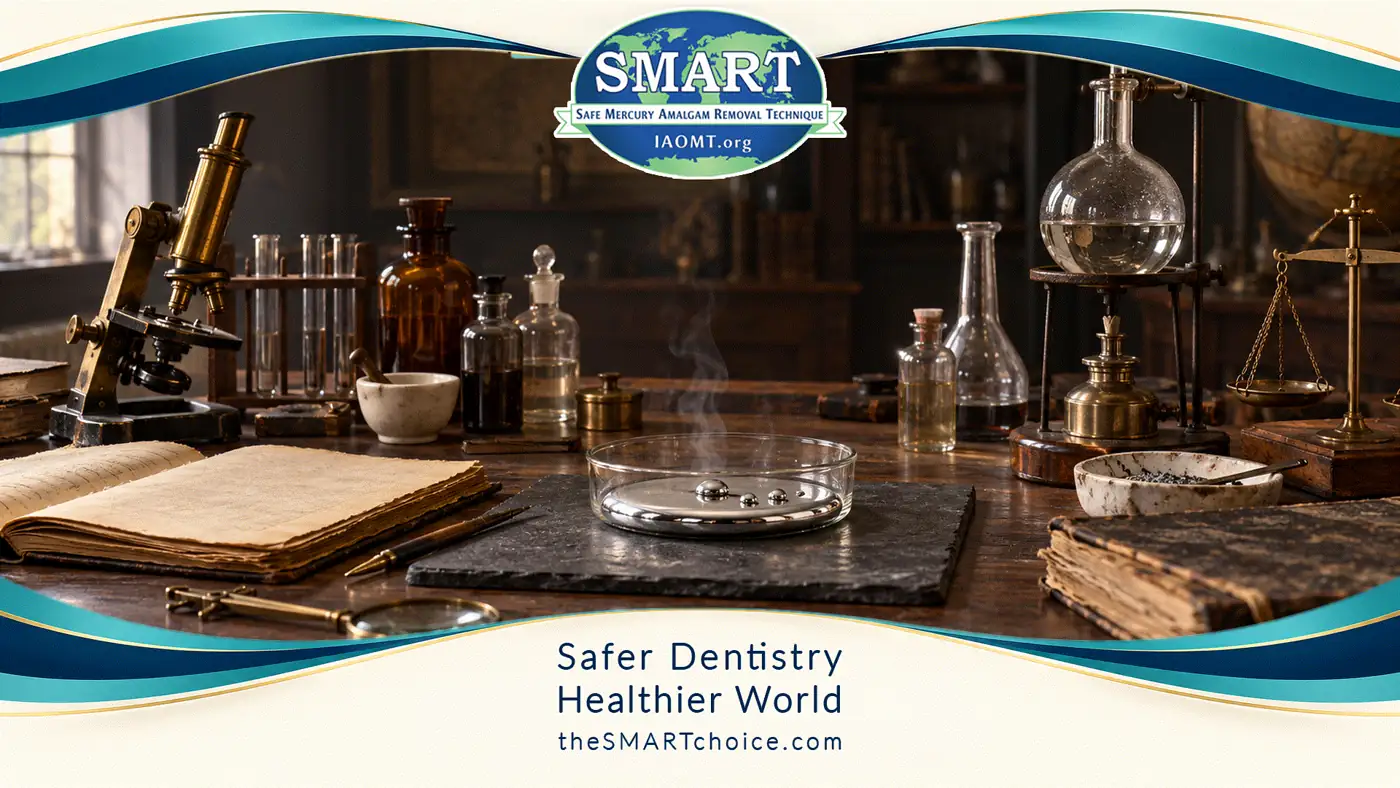
- Never normalize visible mercury beads in clinics or labs.
- Translate history into today’s SMART PPE and air controls.
- Avoid anachronistic over-claim—this is foundational history, not a 2020s RCT.
Bottom line: Stock’s 1926 warning that mercury vapor is dangerously easy to underestimate remains pedagogically powerful for SMART training—pair it with modern exposure science, not nostalgia alone.