Aaseth J, Hilt B, Bjørklund G. Mercury exposure and health impacts in dental personnel. Environmental Research. 2018;164:65-69.
Dentists and dental nurses who still work with amalgam inhale metallic mercury vapor as a chronic occupational exposure. Aaseth, Hilt, and Bjørklund review toxicological, clinical, and epidemiological evidence on health impacts in dental personnel—keeping the spotlight on the people who stand over the handpiece day after day.
What the study found
PubMed/abstract highlights (PMID 29482185):
Based on toxicological, clinical, and epidemiological knowledge, the present paper reviews the status regarding possible deleterious health effects from occupational exposure to metallic mercury (Hg) in dental practice. Symptoms from the central nervous system are among the health problems that most often are attributed to Hg exposure in dentists and dental nurses working with amalgam. Uncharacteristic symptoms of chronic low-level Hg vapor exposure including weakness, fatigue, and anorexia have been observed in numerous studies of dental personnel. It is crucial to protect both human health and the environment against negative effects of Hg. In line with this, the use of dental amalgam in industrial countries is about to be phased out. In Norway and Sweden, the use of the filling material is banned. Copyright © 2018 Elsevier Inc. All rights reserved.
Additional publisher highlights state that symptoms attributed to mercury frequently appear in dental personnel working with amalgam; chronic low-level Hg⁰ symptoms include weakness, fatigue, and anorexia; protecting health and environment against mercury remains crucial; and WHO has recommended phasing out dental amalgam. Norway and Sweden have banned the material.
[Paywall note: Full Environmental Research text may require access.]
Why it matters for SMART
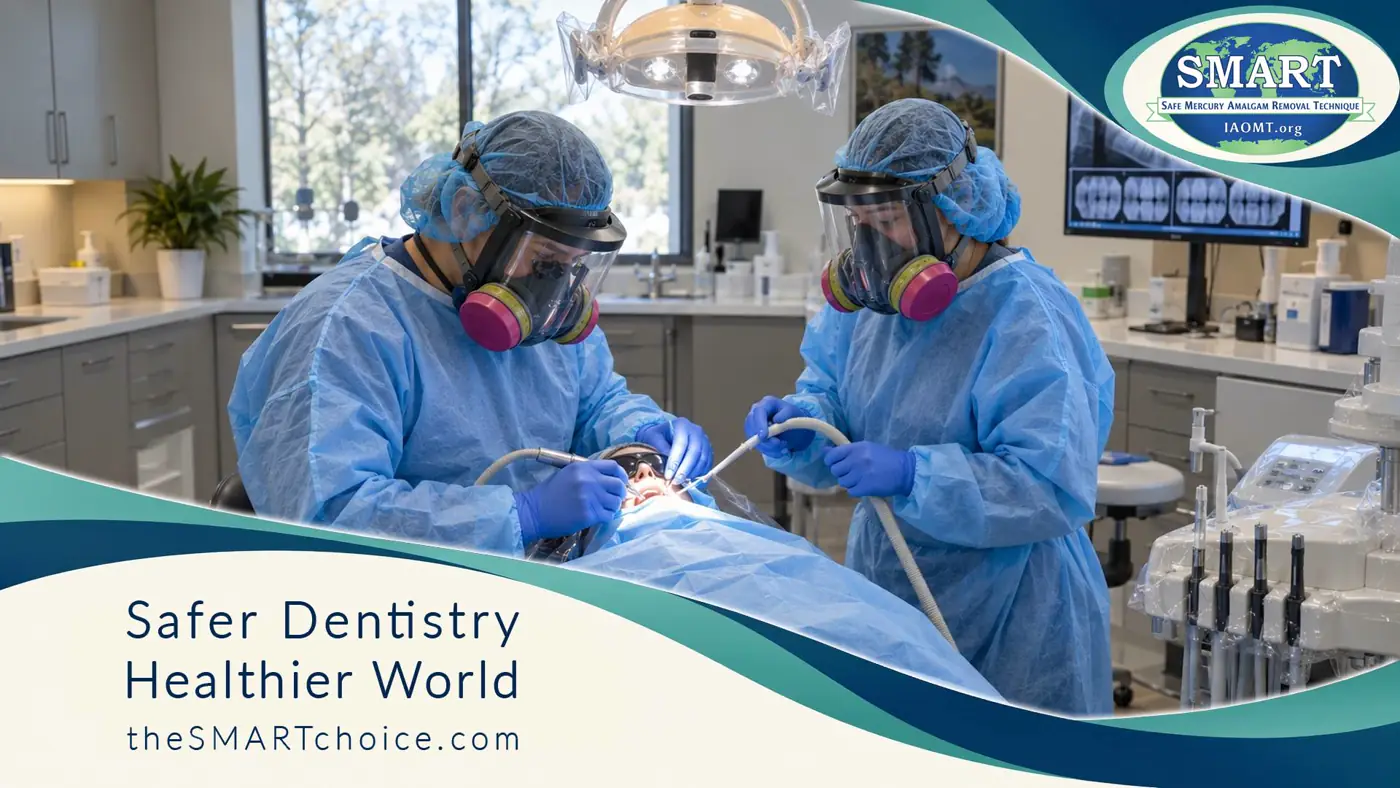
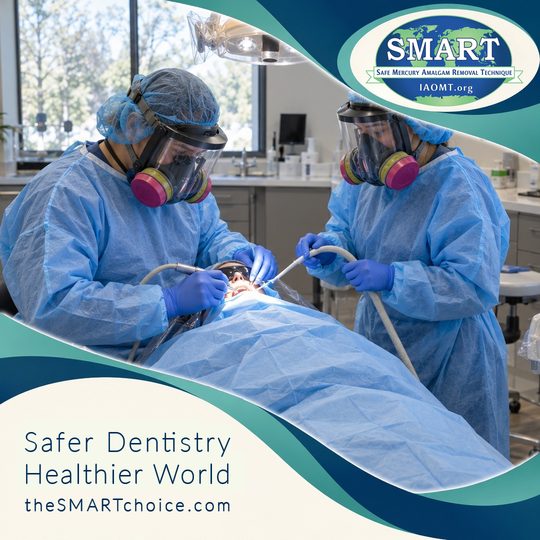
This review keeps the focus on workers, not only patients. SMART’s full-face respirators, gowns, trap-maintenance PPE, and air filtration are occupational controls. Mentions of Nordic bans also align with IAOMT’s longer-term phase-out stance while SMART manages the removals that remain in clinics still transitioning.
Practical takeaways
- Name amalgam work as Hg⁰ exposure — not a trivial nuisance odor.
- Watch for nonspecific CNS-type symptoms in long-term staff—and investigate workplace controls.
- Apply SMART PPE every removal day, not only “big” cases.
- Support national phase-down policies while protecting today’s team.
- Pair clinical technique with environmental separators so workplace mercury does not become community mercury.
Bottom line: Aaseth et al. summarize evidence that dental personnel working with amalgam face metallic mercury exposure linked to CNS-type symptoms—and that protecting health (and phasing amalgam down) remains essential, reinforcing SMART’s occupational rules.