Richardson GM, Brecher RW, Scobie H, Hamblen J, Samuelian J, Smith C. Mercury vapour (Hg(0)): Continuing toxicological uncertainties, and establishing a Canadian reference exposure level. Regulatory Toxicology and Pharmacology. 2009;53(1):32-38.
Policy and clinic decisions need a number: how much mercury vapor is too much for continuous inhalation? Richardson and colleagues reviewed toxicological uncertainties for elemental mercury vapor and derived a Canadian reference exposure level (REL).
What the study found
PubMed abstract (PMID 18992295):
There are four published reference exposure levels (RELs) for Hg(0), ranging from 0.09microg/m(3) to 1microg/m(3). All RELs were derived from the same toxicological database, predominantly of male chloralkali workers. Some key factors are apparent which make the use of that database questionable for REL derivation. Occupational studies of chloralkali workers are not an appropriate basis for a REL for Hg(0). Concomitant exposure to chlorine gas (Cl(2)) diminishes uptake and effects of Hg(0) exposure. There are gender differences in Hg(0) uptake, distribution and excretion, with females at potentially greater risk from Hg(0) exposure than males. Studies of chloralkali workers focused almost exclusively on adult males. Recent investigations of dental professionals (dentists, technicians, assistants) have failed to define a threshold in the dose-response relationship linking Hg(0) with neurobehavioural outcomes, an observation generally ignored in Hg(0) REL development.
Finally, there is a growing database on genetic predisposition to health effects associated with Hg(0) exposure. Based on these considerations, we propose a different key study for REL derivation, one that involved male and female dental professionals without concomitant Cl(2) exposure. Adjusting the LOEAL to continuous exposure and applying appropriate UF values, we propose a Canadian REL for Hg(0) of 0.06microg/m(3).
[Paywall note: Full RTP article may be subscription-only; do not invent numeric REL values beyond what the accessible abstract states.]
Why it matters for SMART
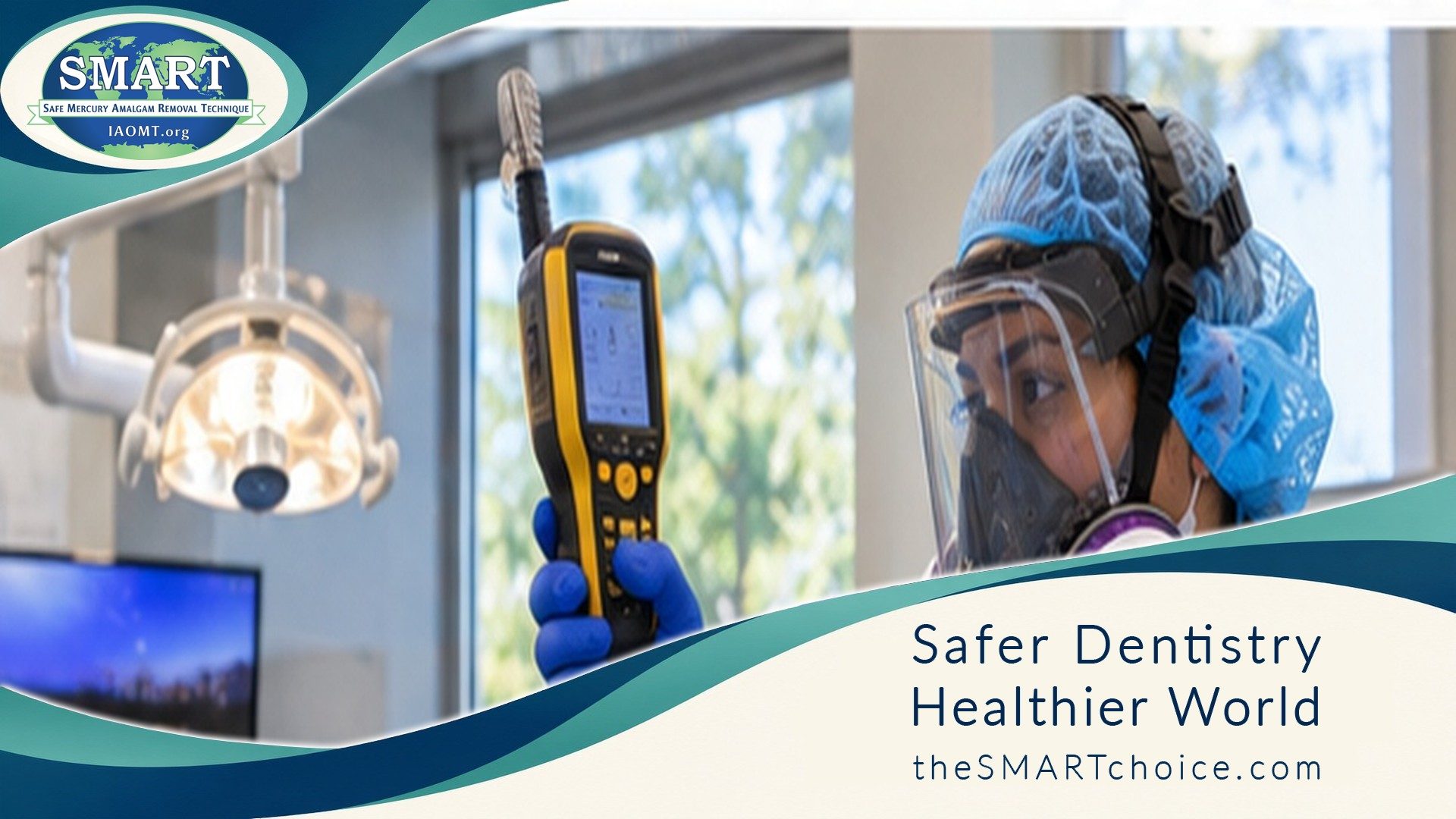
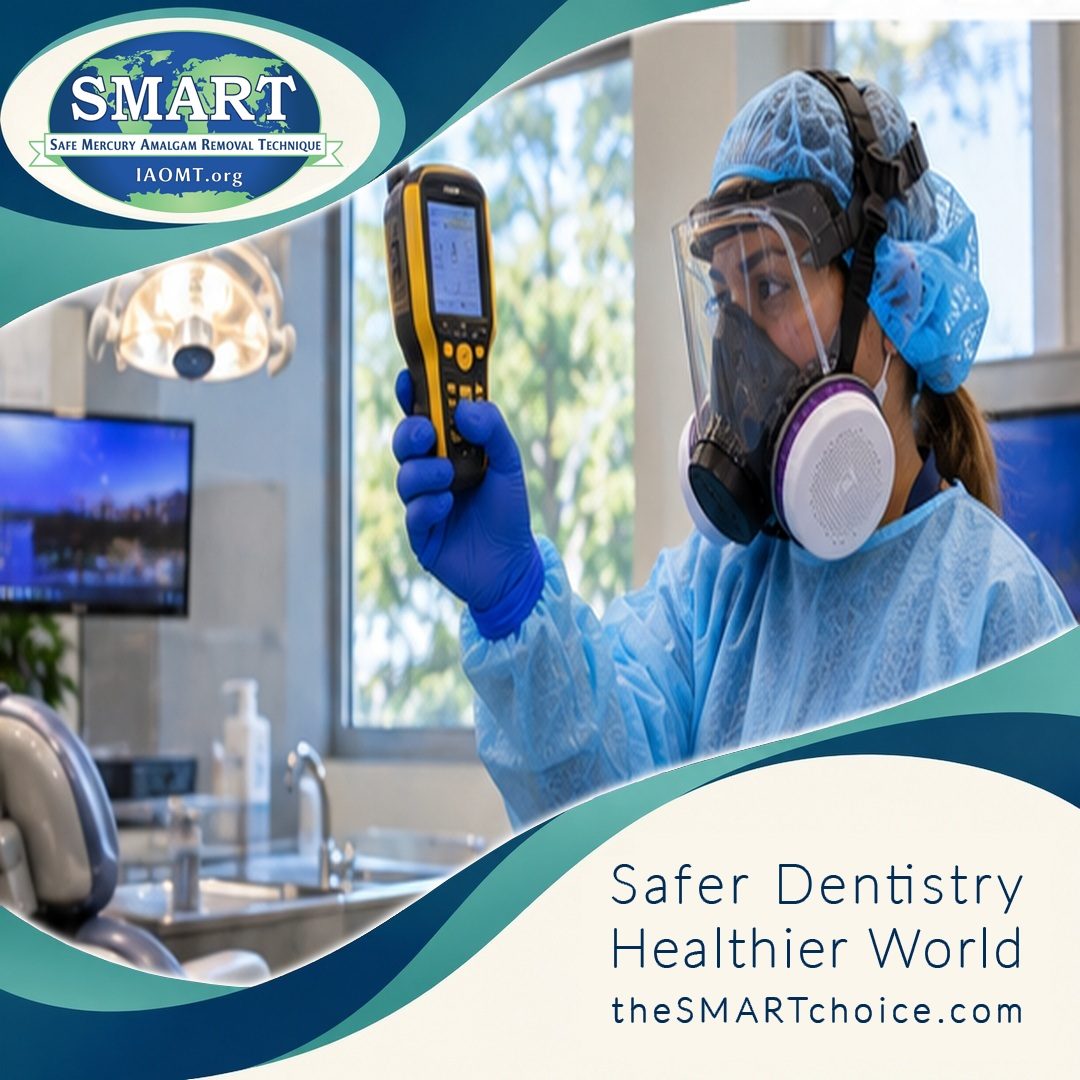
SMART’s air filtration, open-window dilution, at-source capture, and respirator rules exist because vapor concentration in the breathing zone can spike during removal. A formal REL conversation reminds clinics that “detectable” and “acceptable for an 8-hour day” are different questions—and removal is often a peak event layered on chronic clinic background.
Practical takeaways
- Know your jurisdiction’s vapor limits — and treat them as ceilings to stay under, not targets.
- Control peaks at the chair — water, HVE, aerosol vacuum.
- Ventilate the room — filtration + outdoor air when feasible.
- Use mercury-rated respiratory protection during removal.
- Document uncertainty — REL science still debates low-dose neurotoxicity margins.
Bottom line: Richardson et al. (2009) frame ongoing Hg⁰ toxicology uncertainties while proposing Canadian inhalation reference guidance—context for why SMART aggressively suppresses vapor during amalgam work.